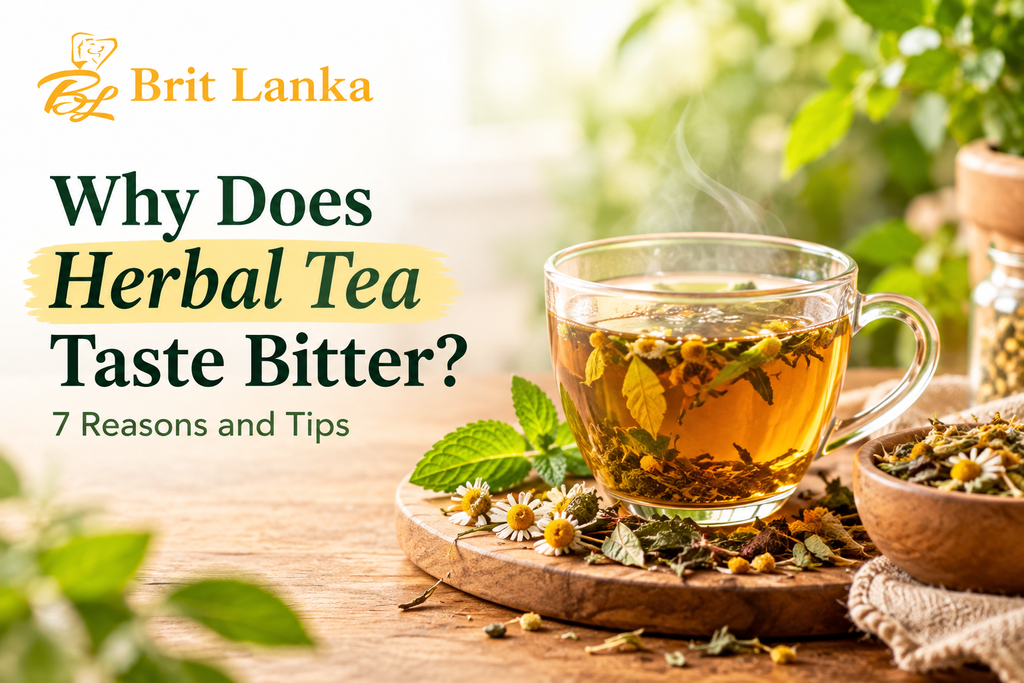
Why Does Herbal Tea Taste Bitter? 7 Reasons and How to Choose a Better-Tasting Tea
Have you ever prepared a cup of herbal tea expecting a pleasant flavour, but ended up with a bitter or unpleasant taste?
You are not alone. Herbal tea can taste bitter for several reasons, including the ingredients, brewing time, water temperature, and quantity of tea used. Some herbal ingredients naturally have a strong or bitter flavour, while others offer a mild, floral, sweet, or spicy taste.
Understanding why herbal tea tastes bitter can help you choose the right product and prepare it in a way that better suits your preferences.
Here are seven common reasons for herbal tea bitterness and practical tips for choosing a better-tasting tea.
1. You Are Using Too Many Tea Leaves
One of the most common reasons herbal tea tastes bitter is using too many leaves, flowers, or herbs in one cup.
When you use a large quantity of dried ingredients, more flavour compounds are released into the water. This can create a stronger taste that may become bitter or overpowering.
How to improve the taste:
-
Start with a small quantity of tea.
-
Follow the preparation instructions on the product packaging.
-
Adjust the quantity according to your taste.
-
Avoid using more ingredients simply to make the tea stronger.
The right quantity can help you enjoy the natural flavour without making the tea unnecessarily intense.
2. You Are Steeping the Tea for Too Long
Steeping time has a major effect on herbal tea flavour.
When herbs or flowers remain in hot water for too long, the tea may develop a stronger, sharper, or more bitter taste. Different ingredients require different preparation times, so there is no single steeping time that works for every herbal tea.
How to improve the taste:
Start with the recommended steeping time. If the tea tastes too strong, reduce the brewing time during your next preparation.
For loose herbal tea, removing the leaves or flowers after brewing can also help you control the flavour.
3. The Water Temperature Is Too High
Water temperature can influence the taste of herbal tea.
Very hot water may extract strong flavour compounds from certain ingredients, especially when combined with a long steeping time. Although many herbal teas are prepared with hot water, the ideal method depends on the ingredients used.
How to improve the taste:
-
Follow the preparation instructions provided by the seller.
-
Avoid boiling the ingredients for longer than recommended.
-
Experiment with a slightly shorter brewing time.
-
Taste the tea before adding more ingredients.
A simple change in preparation can make the flavour more enjoyable.
4. Some Herbal Ingredients Naturally Taste Bitter
Not all herbal teas are naturally sweet or mild.
Ingredients such as certain leaves, roots, and medicinal herbs may have earthy, sharp, or bitter flavour profiles. This does not automatically mean that the product is poor quality.
For example, Guava Leaf Tea and some other leaf-based herbal infusions may have a stronger natural taste compared with floral teas. The flavour depends on the ingredient, preparation method, and individual preference.
How to choose a better-tasting tea:
If you prefer mild or floral flavours, consider exploring options such as:
-
Blue Lotus Flower Tea
-
Butterfly Pea Flower Tea
-
Cardamom Tea
-
Cinnamon Tea
-
Hibiscus Tea
Each tea has its own flavour characteristics, so choosing based on taste can help you find an option you enjoy.
5. The Tea Is Not Stored Properly
Storage can affect the flavour and aroma of dried herbal tea.
If tea leaves or flowers are exposed to moisture, heat, sunlight, or air for long periods, their quality may change. Poor storage can affect the freshness, aroma, and overall drinking experience.
How to store herbal tea properly:
-
Keep the tea in a clean, airtight container.
-
Store it in a cool and dry place.
-
Protect it from direct sunlight.
-
Keep moisture away from dried leaves and flowers.
-
Follow the storage instructions on the packaging.
Proper storage helps maintain the product's intended flavour for longer.
6. You Are Choosing a Tea That Does Not Match Your Taste
A herbal tea may be high quality but still not suit your personal preferences.
Some people enjoy earthy and strong flavours, while others prefer floral, aromatic, spicy, or refreshing teas. If you usually drink mild beverages, a strong leaf-based tea may taste more intense than expected.
Before purchasing herbal tea, think about the flavours you already enjoy.
If you prefer:
-
Floral flavours: Explore Blue Lotus Flower Tea or Butterfly Pea Flower Tea.
-
Spicy and aromatic flavours: Consider Cardamom Tea or Cinnamon Tea.
-
Earthy flavours: Leaf-based herbal teas may be worth exploring.
-
Tart flavours: Hibiscus Tea may offer a different taste experience.
There is no single herbal tea that suits everyone. Finding the right flavour profile is an important part of choosing a product.
7. You Are Expecting Herbal Tea to Taste Like Regular Tea
Herbal tea and regular tea do not always taste the same.
Traditional black tea and green tea are generally made from the Camellia sinensis plant. Herbal infusions, on the other hand, can be prepared using flowers, leaves, spices, roots, and other plant ingredients.
Because of these differences, herbal tea may have a floral, earthy, spicy, or naturally sharp flavour.
If you expect every herbal tea to taste like your usual black or green tea, the first experience may feel unfamiliar. Try different ingredients and preparation methods to discover the flavours you prefer.
How to Choose a Better-Tasting Herbal Tea in the UK
When buying herbal tea online in the UK, look beyond the product name. Consider the ingredients, flavour description, preparation instructions, packaging, and product information.
A few useful questions to ask before purchasing include:
-
What ingredients are included?
-
Is the flavour described as floral, earthy, spicy, or mild?
-
Are the preparation instructions clearly provided?
-
Is the product properly packaged?
-
Does the seller provide information about sourcing and quality?
At The Brit Lanka, you can explore a selection of Sri Lankan herbal teas, dried flowers, and natural tea ingredients. The collection includes different flavour profiles, allowing you to choose a product based on your personal preferences.
Explore the Herbal Tea Collection to discover options such as Blue Lotus Flower Tea, Butterfly Pea Flower Tea, Cardamom Tea, and other herbal infusions.
Frequently Asked Questions
Why does my herbal tea taste bitter?
Herbal tea may taste bitter because of the ingredients, excessive tea quantity, long steeping time, high water temperature, or unsuitable preparation. Some herbs also have a naturally bitter flavour.
How can I reduce the bitterness of herbal tea?
Try using fewer tea leaves or flowers, reducing the steeping time, and following the product's brewing instructions. You can also choose a tea with a milder flavour profile.
Is bitter herbal tea a sign of poor quality?
Not necessarily. Some herbal ingredients naturally have a strong or bitter taste. However, freshness, storage, ingredients, and preparation can also affect flavour.
Final Thoughts
Herbal tea does not have to taste bitter or unpleasant. In many cases, the flavour can be improved by adjusting the quantity, brewing time, and preparation method.
The most important step is choosing a herbal tea that matches your preferences. Whether you enjoy floral, spicy, earthy, or mild flavours, exploring different ingredients can help you discover a tea you genuinely enjoy.
Before buying, check the ingredients, flavour information, preparation instructions, and storage recommendations. With the right product and preparation method, herbal tea can become a more enjoyable part of your daily routine.
Explore The Brit Lanka's herbal tea collection and discover a flavour that suits you.
Related post
21
Sep